mercredi 7 septembre 2011

Saint Joseph du Dakota : peut mieux faire

L'oeuvre des Indiens sioux du Dakota est une légende dans le monde du fundraising. Ils ont récolté en 2010 près de 50 millions de dollars et leur patrimoine s'est accru durant cette période de près de 12 millions de dollars pour atteindre 76 millions.

Pour y parvenir, les fundraisers qui travaillent pour eux font appel à des méthodes vigoureuses, pas toujours en accord avec la réalité.

Ce qui a conduit l'association à se faire épingler par le BBB pour des pratiques qu'ils considèrent comme abusives, notamment en mentionnant des urgences qui, au regard de la richesse de l'association, n'ont pas lieu d'être.

In the Alliance's opinion, direct mail appeals sent in 2010 cited emergency financial needs that are not evident in the financial statements St. Joseph's provided to the Alliance.
Specifically, direct mail appeals included references to St. Joseph's emergency financial needs related to the cost of utilities.  Below are excerpts from such an appeal:
“South Dakota winters are known to be brutally cold.  They can last up to six months.  The cost to heat and light the 20 children's homes--along with classrooms and other school buildings--takes a huge toll on our budget.
"That's why I'm looking to you...for your urgent assistance.  Would you please send an emergency gift right away to keep our Lakota students warm this winter?
After leaving the accounting department, I did some additional calculating.  I discovered utilities alone cost us $4.68 a day per child.  Now, at first glance, this may not sound like very much, but when you multiply it by 220 boys and girls, it's an enormous drain on our limited resources.  The total?  Over $376,254"
Given the resources available to the organization, the Alliance disagrees with the claim that the cost of utility expenses is an emergency need.

Quand j'ai reçu un premier mailing de la succursale française de cette œuvre, j'ai cru tout d'abord à une opération frauduleuse car l'adresse et le téléphone sont celles d'une société de services qui assure le secrétariat.

Finalement, j'ai pu vérifier qu'il s'agissait bien d'une opération de fundraising international conduite depuis les Etats-Unis grâce à l'intercession de quelques personnes en France et une avance de fonds de 300 000 euros venant des Etats-Unis.

Le grand manitou du fundraising de cette association catholique est Kory Christianson. Il est si bien considéré par ses pairs qu'il a reçu en janvier 2010  le Max L. Hart Nonprofit Achievement Award.

The Direct Marketing Association's Nonprofit Federation (DMANF) announced Kory Christianson of St. Joseph’s Indian School in South Dakota as the 2010 recipient of its Max L. Hart Nonprofit Achievement Award.

The award recognizes outstanding achievement by an individual within the nonprofit community, and was presented at a luncheon on Friday, Jan. 29, during DMANF’s 2010 Washington Nonprofit Conference at the Renaissance Hotel in Washington, D.C.

“The Awards Committee was very impressed by the detailed and enthusiastic nomination submitted on Kory’s behalf,” said Mary A. Bogucki, chair of DMANF’s Awards Committee, and vice president, Amergent.  “We received notes from individuals praising Kory from both the corporate and nonprofit communities. His leadership, integrity, and humility are the true hallmarks of a worthy recipient. It is no surprise we reached a unanimous decision to present him with this year’s Max Hart Award.”

Christianson has worked in the development office at St. Joseph’s school for over 16 years.  As the executive director of development, he oversees their USA, Germany, and France fundraising programs and leads a team that raises over $50 million annually in support of programs and services for the Native American population throughout all of South Dakota. His commitment to service of the nonprofit community continues, as he is a volunteer fundraiser for the Mitchell Christian School and a member of the Avera Queen of Peace Hospital Foundation board of directors. In 1999, he became a Certified Fundraising Executive (CFRE), and in 2000 was awarded the Charity Fundraising Executive of the Year Award by the National Federation of Non-Profits.

St. Joseph’s Indian School in Chamberlain, South Dakota, is a residential and educational center dedicated to helping the state’s Native American population.  The school is privately operated and receives no regular government funding.  Through the generosity of its supporters, St. Joseph’s provides for all the needs of its 200 students — everything from food and clothing, to a well-rounded education and counseling — at no cost to them or their families.

DMANF’s award was established in 1990 as the Nonprofit Achievement Award, and was renamed in 2005 for Max L. Hart, formerly of the Disabled Americans.  Hart is a DMA Hall of Fame honoree and longtime advocate, supporter, and champion of professionalism for the nonprofit fundraising community. 
Pour l'anecdote, il prend la parole aujourd'hui mercredi 7 septembre dans quelques heures à Omaha sur le thème de la maximisation de l'impact du marketing direct. Je peux vous dire qu'il en connaît un rayon. Il n'est pas avare de son expérience qu'il aime à partager avec d'autres.

Les résultats de ses opérations en France sont très encourageants. Lors de la première année de récolte, St Joseph a engrangé 664 000 euros pour 180 000 euros de frais de fundraising. Ce qui a laissé un solde des ressources de 453 000 euros.


L'agence en charge des opérations ne fait pas le détail. A titre d'exemple, un donateur qui a envoyé un don payé sur sa société a reçu en retour un reçu libellé à l'ordre de la société, ce qui est bien normal, mais ce qui l'est moins est que cette personne n'existe pas en tant que donateur, les courriers ultérieurs ne lui sont pas adressés mais à la société.


Comme package d'accueil, on peut mieux faire.

Un mois plus tard, le donateur a reçu un nouvel envoi, cette fois contenant un calendrier et une lettre dans laquelle on trouve une révélation, l'école pour laquelle ses fonds sont sollicités contient en tout et pour tout 200 élèves, soit rien qu'aux Etats-Unis, 250 000 dollars de dons par élève, de quoi leur offrir un palace cinq étoiles.

Les textes du calendrier sont assez calamiteux car ils donnent l'impression que les Européens ne viennent en aide aux Amérindiens que depuis 1927 data à laquelle des prêtres de la mission du Sacré Cœur ont fondé l'école Saint Joseph du Dakota.

Visiblement les rédacteurs de l'agence n'ont jamais entendu parler des tribulations du jésuite flamand Pierre-Jean de Smet, exactement au même endroit, mais près d'un siècle plus tôt.

Ils ne connaissent pas grand-chose non plus de l'histoire des Indiens sioux car ils auraient pu tirer profit du fait qu'au moins un tiers d'entre eux possèdent des noms français.

Notons que cette association n'est pas la seule à venir en aide aux Indiens sioux.  L'association Oiseau Tonnerre est plus modeste dans ses moyens mais pas dans ses ambitions. Elle présente l'avantage de ne rien ignorer des liens entre les Français et les Sioux, liens que l'agence française de Saint Joseph du Dakota méconnaît totalement.

Pour en savoir plus, je recommande chaudement l'ouvrage d'Arnaud Balvay :


lundi 5 septembre 2011

Ce qui compte, c'est le donateur

Movie Mondays: How one simple change caused 1000% growth in donations


Je suis frappé par la capacité de nos confrères américains à résumer en quelques minutes un point important.

Dans ce post de Christopher Davenport, le fundraiser Tom Ahern rappelle une règle de base de la communication avec le donateur.

Il ne s'agit pas de se faire plaisir, mais de faire plaisir au donateur, lui démontrer que son don de 15, 35 ou 10 000 euros sert à quelque chose.


samedi 3 septembre 2011

Fundraising : il faut dire la vérité aux donateurs


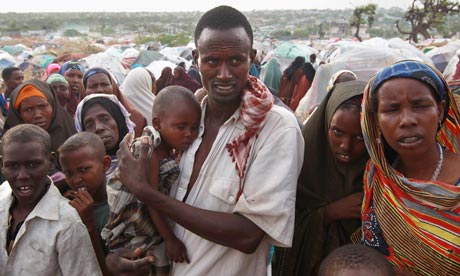
De retour de Somalie, Unni Karunakara, le patron de Médecins sans frontières, a fait des déclarations dans la presse qui méritent d'être soulignées car enfin une association caritative parle vrai en ce qui concerne les promesses faites aux donateurs.

Curieusement dans la dépêche de l'AFP, il n'est pas du tout question de ce point  précis :


Somalie: le terrain le plus difficile pour les humanitaires
NAIROBI — La Somalie, avec sa guerre civile et la multiplication des centres de pouvoir, est le pays le plus difficile au monde pour les humanitaires, contraints de travailler à l'aveuglette face aux conséquences d'une sécheresse historique, estime le président international de Médecins sans frontières, Unni Karunakara.
MSF est une des rares organisations à ne pas avoir quitté la Somalie depuis le début de la guerre civile en 1991, et à travailler aujourd'hui dans certaines régions du sud et du centre contrôlées par les islamistes shebab.
"Mais même avec les réseaux dont nous disposons, nous avons de graves difficultés pour accéder aux régions à problème, et pour mener les estimations indépendantes absolument essentielles pour distribuer de l'aide", souligne le Dr Karunakara. "Aujourd'hui, nous travaillons à la marge" du problème, estime-t-il.
La Somalie "est pour moi le pays le plus difficile" où opérer. "Nous travaillons en Afghanistan, en Irak, mais nous n'avons pas besoin de gardes armés dans ces pays", relève le président international de MSF, de retour d'une visite en Somalie, à Mogadiscio et à Galkayo.
"En Côte d'Ivoire, où il y avait une guerre, il nous a fallu 36 heures pour mener notre première opération. Ici (en Somalie), même obtenir une voiture fait l'objet de négociations".
La sécheresse en Somalie, consécutive à plusieurs saisons sèches, touche 3,7 millions de personnes soit la moitié de la population selon les Nations Unies.
La famine qui en découle sévit essentiellement dans des régions contrôlées par les shebab, où MSF maintient plusieurs programmes d'aide médicale, notamment à Dinsor et à Mareere. "Mais même là, notre accès est très limité", reconnaît le Dr Karunakara.
Les régions officiellement contrôlées par le gouvernement sont, souvent, également difficilement accessibles, ajoute-t-il.
"On parle beaucoup de lever de l'argent et d'amener de l'aide à Mogadiscio. Mais le vrai défi est de savoir comment amener la nourriture du port vers les gens qui en ont besoin", estime le Dr Karunakara.
Du centre et du sud du pays, la crise humanitaire s'est transportée à Mogadiscio, avec l'arrivée de 100.000 personnes fuyant la sécheresse.
"risque d'épidémie élevé"
"Le risque d'épidémie est élevé en raison du surpeuplement et de l'accès très réduit" à des sanitaires et à des points d'eau. MSF a entamé dans la capitale somalienne une campagne de vaccination contre la rougeole, avec 3.000 enfants vaccinés à ce jour, et doit ouvrir la semaine prochaine un centre de prévention du choléra.
"Nous voyons déjà beaucoup de cas d'infections de la peau, des yeux, des poumons, des diarrhées aiguës. Tout ceci est le signe d'une très mauvaise situation hygiénique", s'inquiète le médecin.
Le retrait des shebab de Mogadiscio le 6 août n'a pas radicalement amélioré la situation. "Il y a un vide du pouvoir" dans les quartiers qu'ils ont abandonnés, obligeant les organisations humanitaires à négocier avec quiconque y dispose d'un réel pouvoir, dit le patron de MSF.
"En ce moment nous interviewons 200 personnes pour des postes d'infirmières. Mais chaque embauche doit être discutée avec les chefs de clans, qui vont dire ensuite qui peut être embauché ou pas", relève le Dr Karunakara.
Le patron de MSF rêverait de davantage de visibilité quant à l'ampleur de la crise. Les contrôles effectués par ses équipes suggèrent un taux de malnutrition sévère de près de 30% chez les enfants de moins de cinq ans, mais il souligne qu'"il ne s'agit pas de données scientifiques".
"Nous évitons de donner des chiffres globaux, car de tels chiffres ne signifient rien", estime-t-il, appelant de ses voeux "un accès beaucoup plus ouvert aux régions touchées par la sécheresse, afin que nous puissions y mener de vraies estimations".

En revanche, dans  ce papier de Tracy McVeigh dans les colonnes du Guardian, le journaliste se fait bel et bien l'écho des propos de Unni Karunakara que tous les fundraisers devraient conserver à l'esprit : ne pas faire des promesses qui sont sans rapport avec la réalité.

Charity president says aid groups are misleading the public on Somalia

Médecins Sans Frontières executive says charities must admit that much of the country can't be helped 

The head of an international medical charity has called on aid agencies to stop presenting a misleading picture of the famine in Somalia and admit that helping the worst-affected people is almost impossible.

The international president of Médecins Sans Frontières (MSF), Dr Unni Karunakara, returned from Somalia last week and said that, even though there was chronic malnutrition and drought across east Africa, hardly any agencies were able to work inside war-torn Somalia, where the picture was "profoundly distressing". He condemned other organisations and the media for "glossing over" the reality in order to convince people that simply giving money for food was the answer.

According to Karunakara, agencies have been able to provide medical and nutritional care for tens of thousands in camps in Kenya and Ethiopia, which have been receiving huge numbers of refugees from Somalia. But trying to access those in the "epicentre" of the disaster has been slow and difficult. "We may have to live with the reality that we may never be able to reach the communities most in need of help," he said.

Karunakara said that the use of phrases such as "famine in the Horn of Africa" or "worst drought in 60 years" obscured the "man-made" factors that had created the crisis and wrongly implied that the solution was simply to find the money to ship enough food to the region.

He described Mogadishu, the Somali capital, as dotted with plastic sheets supported by twigs, sheltering groups of weak and starving people who had walked in from the worst-affected areas in southern and central Somalia. "I met a woman who had left her home with her husband and seven children to walk to Mogadishu and had arrived after five days with only four children," he said.

"MSF is constantly being forced to make tough choices in deploying or expanding our activities, in sticking to our principles of neutrality with the daily realities of people going without healthcare, without food. Our staff face being shot. But glossing over the man-made causes of hunger and starvation in the region and the great difficulties in addressing them will not help resolve the crisis. Aid agencies are being impeded in the area.

"MSF has been working in Somalia for 20 years, and we know that if we are struggling then others will not be able to work at all. The reality on the ground is that there are serious difficulties that affect our abilities to respond to need."

He said charities needed to start treating the public "like adults". He went on: "There is a con, there is an unrealistic expectation being peddled that you give your £50 and suddenly those people are going to have food to eat. Well, no. We need that £50, yes; we will spend it with integrity. But people need to understand the reality of the challenges in delivering that aid. We don't have the right to hide it from people; we have a responsibility to engage the public with the truth."

Chronic malnutrition, said Karunakara, is not new in east Africa and needs long-term action. "The Somali people have been living in a country at war, with no government, for 20 years, with several long periods of hardship, of famine and drought. This harvest failure is just what has tipped them over the edge this time, a catastrophe made worse," he said.

A brutal war between the transitional government, which is backed by western nations and supported by African Union troops, and armed Islamist opposition groups, notably al-Shabaab, is ongoing in Somalia. Fierce clan loyalties keep independent international assistance away from many communities, meaning that Somalis are trapped between various forces, depriving them of food and healthcare for political reasons.

"We face constant difficult challenges over simple things like a new nurse or getting a car," said Karunakara. "When we need to be saving lives with a fully fledged medical response, we constantly need to be communicating with both sides in a war, reminding them what humanitarian aid is. One needs only to look at how few charities are working in Somalia."

Ian Bray, a spokesman for Oxfam, said it was unhelpful for aid agencies to be seen to be arguing with each other.

"We're being honest with donors and we have always been honest," said Bray. "A drought is a natural occurrence; a famine is man-made. We don't go around to people saying we have a magic wand, give us £5 and we will make Africa feed itself. We do say give us £5 and we won't use it to give you a history of Somalia, but we will use our expertise to save lives. This is what the bargain is we make with our donors. If you support us, we will do our level best to alleviate the distress for those people in most dire need."


jeudi 1 septembre 2011

Des avortistes pas en phase avec la société

Dans le Guardian, la journaliste Polly Curtis se fait l'écho de l'inquiétude des organisations avortistes britanniques face à la perspective d'un changement de législation.

Les associations de gauche qui militent pour la banalisation de l'avortement se heurtent à une difficulté considérable, il est très difficile de « vendre » un avortement au public habituel des donateurs.

Leur action d'influence ne peut s'appuyer sur une action de masse par le biais du marketing direct car elle risque fort de perdre beaucoup d'argent.

La solution consiste à faire des actions d'influence auprès de pourvoyeurs de fonds publics ou para-publics.

C'est la recette à laquelle fait appel, par exemple, SOS Racisme.

Toutefois, cet échec à entrer en empathie avec la population est révélatrice du fait que ces associations proposent des politiques qui ne sont pas aussi en phase avec ce que pensent les citoyens que les grands médias (comme le Guardian) le prétendent.

A titre de comparaison théorique, je suis frappé par le fait que l'Œuvre des orphelins de la Police recueille à elle seule 15,5 millions d'euros du public pour seulement 0,1 million d'argent public.

Le budget de l'Œuvre des orphelins de la Police.


En d'autres termes, on pourrait avancer que cette association est bien plus représentative de la France que SOS Racisme dont le budget d'un peu plus de 1 million d'euros est pour l'essentiel payé par de l'argent public et par Pierre Bergé.


Abortion law reform plans criticised by women's groups 
Charities and health bodies call on equalities minister to intervene and protect rights of women to get impartial advice
A coalition of women's groups has written to the equalities minister, Lynne Featherstone, urging her to intervene in the row over backbenchers' attempts to reform abortion protocols. They say the proposals could delay abortions and allow anti-abortion groups to counsel women.

Featherstone is being asked to seek a guarantee within government that the current system won't change, ahead of a potential vote that could overhaul the existing counselling services for women seeking to terminate a pregnancy

The signatories to the letter include the Fawcett Society, the Women's Health Equalities Consortium, the Medical Women's Federation and the National Assembly of Women as well as the trade union Unison.

It will pile pressure on the Liberal Democrat minister, who has faced criticisms that she has failed to intervene on other coalition policies that Labour claims adversely affected women.

"Preventing abortion providers from offering decision-making support opens the door for organisations opposed in principle to abortion to become formally involved in counselling women on their pregnancy options," the letter says. "Previous governments have always acted on evidence and taken guidance from expert medical professionals. There is no evidence of a need for change in this area and no support from professional clinical organisations for such change."

The intervention comes amid wranglings in government over how to handle an amendment that could be selected when the health bill returns to the Commons next week, which would mean all women seeking abortions would be offered counselling independent of the abortion provider, in a move that could strip charities that provide the services of their current role. It is being proposed by the Tory backbencher Nadine Dorries and Labour's Frank Field and backed by a campaign with links to anti-abortion groups.

On Sunday, the Department of Health said that it would go ahead with plans to introduce independent counselling and consult on how it would work, in a move that was interpreted as caving into the campaign.

After an intervention from No 10 and furious Lib Dems, the government announced it will not support the amendment – though MPs will still get a free vote – with David Cameron and DoH ministers voting against. It also reworded its position on the plans, saying it would consult on the "best" counselling options for women but that the outcome was not a foregone conclusion.

Anne Milton, the public health minister, wrote to coalition MPs yesterday to clarify the government's position and confirm that the health ministers would vote against it.

On Thursday, the Right to Know campaign, which is supporting Dorries's and Field's campaign and is backed by some known anti-abortionists, responded robustly to the government's opposition to the plan. It published a poll of MPs conducted in April, prior to the row over the implications of the move, which found that some 92% backed the statement. "A woman should have a right to impartial advice when considering having an abortion, from a source that has no commercial interest in her decision."

A spokeswoman for the campaign said: "The widespread support for the objectives of this campaign is unsurprising.  It is important that conflicts of interest are removed from the provision of abortion counseling.

 "We want to see women considering abortion provided with the space to think through their decision. This is not a party political issue. The welfare of women is at stake here.

Yvette Cooper, the shadow equalities minister, said the changing position had left the issue mired in confusion. "There is now complete confusion and chaos in government on abortion. This is what happens when David Cameron pursues short-term headlines without thinking the issues through," she said.

Darinka Aleksic, co-ordinator of the Abortion Rights UK campaign, said: "We need to be clear, these amendments are an attack on women's reproductive rights. If implemented they will limit, rather than expand, the availability of impartial advice and information to women facing unplanned pregnancy. Their aim is to restrict and deter women from accessing abortion services."

Evan Harris, vice-chair of the Liberal Democrat federal policy committee and pro-choice campaigner, said: "Previous governments in this sensitive area have always acted only on the basis of the best advice from expert medical organisations and I will strongly urge the government not to disturb or propose disturbing the existing arrangements for providing unbiased advice until this has demonstrated that there is a problem and persuaded the Royal Colleges or BMA of the case."

mercredi 31 août 2011

Sans contrainte de l'Etat, pas de bénévoles pour les associations caritatives allemandes

Dans les colonnes de l'hebdomadaire allemand Der Spiegel, la journaliste Catherine Cheney révèle les conséquences inattendues de la fin du service militaire en Allemagne pour les associations qui dépendent des objecteurs de conscience pour assurer leurs missions.


Lack of Volunteers
End of Conscription Causes Headache for Charities


When Germany eliminated conscription this year, an extensive civil service program for conscientious objectors also came to an end. A new program launched to replace it, however, has not found enough volunteers. Now, many service organizations are facing shortages.


When Matthias Fritzsche began working as a volunteer helping the elderly in Berlin, he had no idea how many people were in need of assistance. Now, a year later, he says the experience has helped him find his calling.

Fritzsche, though, wasn't a willing volunteer when he began his stint with the relief agency Malteser International. For decades, young Germans who registered as conscientious objectors to mandatory military service were required to perform volunteer work instead. Without that policy, 26-year-old Fritzsche might never have decided to pursue a career in medicine.
"I wouldn't have chosen to do this, so it's good the government said I had to," says Fritzsche, who will continue volunteering for Malteser after serving in the civil service for 10 months.

That government requirement, though, is now ending. On July 1, the German government officially terminated its mandatory military service for young men -- which means the army of conscientious objectors, upon which the German social sector had relied on for 50 years, will also disappear. And just as the German military is struggling to attract recruits to fill the military ranks, the federal government is scrambling to attract volunteers to a federal program that is meant to fill the civil service void.

'Commit Themselves to the Common Good'

Many social service organizations are concerned that the effort will not be successful. The new Federal Voluntary Service is looking to eventually recruit 35,000 volunteers for placements across Germany. Unlike the civil service program, available only young men opting out of the military, the new service is open to women and does not have an age limit.

German Family Minister Kristina Schröder has said she invites others to "commit themselves to the common good" and to ensure that the new service "will be as successful as the civil service over the last 50 years."

Critics, though, argue that the government cannot expect to change the "culture of volunteerism" in just a few short months. An all-too-quick transition, they say, has led to miscommunication and confusion. And, looking to the Sept. 1 start date for the voluntary year, they worry that the young men who once opted to work in retirement homes, youth programs, and hospitals did so, at least initially, because it was required.

Now that the national volunteer service is, in fact, voluntary, who will sign up?

"This kind of voluntary work has to be established in Germany," says Claudia Kaminski, a spokesperson for Malteser, which relies on volunteers for its humanitarian aid work. "Our society is used to this mandatory military service, and now its end shows our society that everyone has to care."

'Rather Difficult'

Kaminski says that as of Aug. 18, about 320 volunteers from the Federal Voluntary Service had signed up for assignments lasting six to 24 months with Malteser, though the organization had expected 1,000 new contracts by Sept. 1.

"The way [the new service] was communicated was rather difficult," says Kaminski. "First the government told us we are going to shorten the service, and then it was quite surprisingly stopped in the middle of the year."

Forty percent of the civil service volunteers at Malteser agreed to stay on longer, which Kaminski says will help with the transition. But she expects it will take years for the organization to regain its annual number of volunteers, and until then, it will face challenges in serving the community at the level it has in the past.

The extended service of civil service volunteers like Fritzsche not only helps organizations during the transition, but also allows the government to keep lower-than-expected recruitment numbers hidden in the small print.

Hermann Kues, a state secretary in the Family Affairs Ministry, which oversees the new service, touted the fact that there were 17,300 Federal Voluntary Service contracts as of July 1. He said it was a sign of the nationwide interest in volunteering. But 14,300 of those contracts were with former civil service volunteers who extended their service, meaning only 3,000 new people had signed up to serve by the launch of the program.
The Ministry of Family Affairs said it expects 10,000 new contracts by the end of October, with an eventual goal of 35,000 volunteers.

"The Voluntary Civil Service is completely new and we have to do some publicity to make sure people know about the service," said Katja Laubinger, a spokesperson for the ministry.

Part The ministry has made marketing a priority for the new service in the hope that it will gain the national reputation of its two counterparts, the Voluntary Social Year and Voluntary Ecological Year, which have been around for decades and already have registered a combined total of more than 30,000 volunteers for the upcoming year.

The Voluntary Social and Ecological Years are also federally funded, but organized primarily on a state-by-state basis. They are available to young people ages 16 to 27. Like the new voluntary service, they offer a minimal stipend and state-sponsored health insurance to its recruits.

Laubinger says there were discussions about the possibility of merging the new service with these two existing volunteer programs, but the government ultimately decided to maintain the balance between having national and regional organizations.

Bernd Kuhlmann, who places young people in Ecological Voluntary Year assignments throughout Berlin, has a different take. "Young people know us, the schools know us, and we're very successful," he says. "We would have preferred to … make one organization of it."

Fearful of Losing Funds

In a perfect world, says Kuhlmann, the government would continue to provide funding without exerting control, as it did with the civil service, which was "integrated into the framework." Instead, he says, organizations did not receive some of the funds they had counted on for the upcoming year.

"We had 70 spaces here in Berlin for conscientious objectors," Kuhlmann says. "We made partnerships with new organizations and facilities, but now we have lost our funding."

Hartmut Brombach, who coordinates Voluntary Social Year placements across Germany, says he fears losing people in addition to funds. He says it will be more expensive for civil service organizations to take on young people who opt for the Voluntary Social or Ecological Year over the Federal Voluntary Service.

In a continuing back-and-forth that reveals the confusion surrounding this new Federal Voluntary Service, the government says this is not the case.

Hammond Schäfer, a spokesperson for the Family Ministry, counters that the government provides civil service organizations with €200 per volunteer each month regardless of the program they choose. "Quite a few civil service organizations are skeptical," he says, trying to address the confusion over numbers. "They're not very fond of the federal voluntary service."

"We must take part in this new program, because if we don't take part we won't get any money," said Brombach. "But I think the solution will not be one or the other but a third way between these two programs."

Despite the concerns and the confusion, there is some cause for optimism.

The number of young people signing up for volunteer programs has grown by tens of thousands over the last decade, and on average, three people apply for every one position offered by the Social Voluntary Year. Those numbers could increase more with the addition of women and senior citizens who were not able to participate in the civil service. And with a €350 million annual budget, the government is investing more than ever in volunteer services.

A Legitimacy Problem

Some organizations are confident that with continued coordination, the problems will work themselves out.

"The government was aware about the need of compensation relating the abandonment of military service and civil service," explains Gisela Graw of the humanitarian aid organization Arbeiter Samariter Bund. "There were, are and will be common meetings, efforts and modifications regarding the new national voluntary service and the challenge of establishing it with success."

But time is ticking for the Federal Voluntary Service to assert itself as a worthy replacement for the treasured tradition of the civil service.

"The government has a lot of money, they have a big office, and yet they only get 3,000 people to sign up," Kuhlmann says, sitting before a stack of brochures on environmental volunteer opportunities in Berlin. "Now, they have a problem of legitimacy."


Le scandale SOS Racisme

Le journaliste Tefy Andriamanana dans les colonnes de Marianne le jeudi 25 Août 2011 a exposé les soucis financiers de l'association SOS Racisme à la suite de l'échec de son concert du 14 juillet 2011.

Une tapée de partenaires mis en exergue sur la promo du concert…

La lettre de l'association pour solliciter des fonds à ses « parrains ».

Le constat d'échec transmis par cette lettre est terrifiant. Comment avoir envie de verser des sommes, souvent importantes, à une association qui avoue être isolée dans la société française ?

C'est sans doute cette marginalisation qui explique la « défaillance » de certains partenaires.

Le résultat positif du concert semblerait donc davantage révélateur du succès des artistes mobilisés plutôt que de l'adhésion à une cause antiraciste mal gérée, vieillie et moribonde. En outre, l'image de marque de SOS Racisme est désormais associée dans l'esprit des Français à des démarches liberticides ou délatrices. Pas de quoi ouvrir les porte-feuilles.

Enfin, il est proprement scandaleux qu'une association qui prétend représenter une majorité de Français (voir le texte de la lettre) ne récolte que 6,8 % de ses recettes de donateurs ordinaires, de citoyens comme vous et moi.

Quand le budget est alimenté par des subventions publiques ou par Pierre Bergé, on ne peut pas prétendre refléter la population française.

Un objectif pour SOS Racisme, cesser de dépendre des subventions publiques et trouver ses recettes de fonctionnement auprès des Français.

Pourquoi ne pas essayer le fundraising ?


Dominique Sopo a évoqué la « situation financière des plus délicates » de son association suite à son concert du 14 juillet. Manque de chance, SOS Racisme a raté une subvention de 100 000 euros venant du Conseil régional d’Île-de-France.

SOS Racisme dans le rouge ? L’Union a révélé dans un article au ton cinglant que Dominique Sopo, président de Sos Racisme, a envoyé une lettre le 21 juillet aux parrains et marraines de son association afin de récolter des dons. Dans son courrier, le président semble vouloir dire que certains sponsors du « Concert pour l’égalité » du 14 juillet, ont fait défaut mettant ainsi à mal les finances de l’association. « En raison de la défaillance de certains partenaires, cette opération nous met dans une situation financière des plus délicates, dont l'association doit sortir le plus rapidement possible », écrit-il.

Mais si SOS Racisme n’a pas pu avoir tous les financements nécessaires pour son concert, ce n’est pas forcément la faute aux autres. En effet, l’association aurait bien aimé recevoir l’obole de la Région Île-de-France. Elle a fait une demande en ce sens pour une subvention de 100 000 euros, a-t-on appris au Conseil Régional.

Mais, manque de pot, le dossier de l’association n’a pas pu déposer de dossier complet avant la réunion de la commission permanente du 8 juillet. Résultat, le chèque de 100 000 euros lui est passé sous le nez. Une jolie perte quand on sait que les dépenses 2009 de l’association (selon les comptes publiés au Journal officiel ) frôlent les 1,1 millions d’euros. Néanmoins, l’association a pu toucher une subvention de 160 000 euros de la Mairie de Paris, qui a en plus versé 30 000 euros pour le village associatif mis en place à l’occasion du concert et encore 40 000 euros pour son fonctionnement.

Du côté de Sos Racisme, on confirme l’existence du courrier de Sopo, tout en précisant que ce genre d'appel aux dons est fréquent. En revanche, pas de commentaire sur la question de la subvention ratée.

Mais même si l’association « aurait aimé avoir plus d’argent pour le concert », elle refuse de tirer la sonnette d’alarme sur sa situation financière. « C’est normal pour une association comme la nôtre quand on mène ce genre de projet », explique-t-on. On dénonce aussi la reprise de l’article de l’Union par des sites et blogs d’extrême-droite comme Fdesouche : « Pour eux, on aura toujours tort, qu’on gagne ou qu’on perde de l’argent ».

Quelle est la situation financière exacte de l’association ? En 2009, selon ses comptes parus au Journal Officiel, SOS Racisme a touché 904 596 euros de dons et subventions pour des dépenses de 1,095 millions d’euros pour la même année. La plus importante subvention est d’un montant de 348 000 et vient de l’Acsé (Agence pour la cohésion sociale et l’égalité des chances), un organisme public. Dès 2009, l’association connaissait des pertes financières de 3 660 euros plus exactement après un excédent de 31 778 euros en 2008. On apprend aussi que la dette de l’association était de 305 701 euros en 2009.

L’association qui compte une trentaine de permanents, n’est donc pas aussi riche qu’on pourrait le croire. Et la subvention ratée au Conseil régional d’Ile de France n’a pas arrangé ses affaires. Ironie du sort, le vice-président chargé de la culture à la Région n’est autre que… Julien Dray, un des fondateurs de Sos Racisme. Comme quoi, l’association ne peut pas avoir des potes partout.

Voici l'article de l'Union

La petite lettre du président Sopo SOS Racisme « en situation financière des plus délicates »…


Ruinée par le concert du 14 juillet, SOS Racisme est une association au bord du redressement judiciaire… Dominique Sopo essaie de s'en tirer en tapant ses contributeurs ordinaires, et donc majoritairement, les ministères, l'État, le contribuable. Une bonne idée en cette période de crise de la dette et de déficit public…

DIMANCHE dernier, dans nos pages Satyricon, nous expliquions que la très socialiste association SOS Racisme, pour être richement dotée, notamment en fonds publics, connaissait régulièrement des soucis en matière de « phynances ».
En effet, le budget annuel de cette annexe du PS tourne autour du million d'euros, dont un peu plus de la moitié sort de la poche des contribuables.
Cette année, SOS Racisme qui voulait « renouer avec sa capacité à imposer des problématiques dans la société française », pour reprendre les mots de Dominique Sopo et sans rapport avec la proximité des primaires et de la présidentielle, a reçu, en sus de ses financements ordinaires, 230 000 euros de subventions prises sur le budget supplémentaire de la mairie de Paris.
Un soutien qui se décompose comme suit : 160 000 euros de subvention pour le concert, plus 30 000 euros pour le « village dédié à SOS Racisme » et enfin 40 000 euros pour le fonctionnement de l'association, sans parler de la mise à disposition du Champ de Mars entre autres broutilles et attentions sympathiques de ce brave Monsieur Delanoë…
Résultat : la belle fête de la gauche et de l'égalité entre potes a réussi au-delà de toute espérance avec plus d'un million de personnes. Cependant, explique Dominique Sopo, dans un courrier qu'il aurait pu intituler SOS Pognon, « en raison de la défaillance de certains partenaires, cette opération nous met dans une situation financière des plus délicates, dont l'association doit sortir le plus rapidement possible. C'est pourquoi, connaissant votre attachement à notre action, je me permets de vous solliciter de façon exceptionnelle afin que vous puissiez nous aider à la hauteur de vos possibilités… »
Et le brave Sopo d'adresser sa bafouille aux ministères, histoire de voir l'État l'aider à financer une campagne présidentielle à la sauce des potes bien compris. Après tant d'années de mauvaise gestion sur fonds publics, c'est au contraire le moment de mettre un terme à ce gaspillage opéré sur le dos des contribuables. Laissons les parrains et marraines privés de SOS Racisme assumer les errements de la gestion Sopo et consorts.
L'État a déjà donné, comme le rappelait la Cour des comptes qui pointait de « graves insuffisances de gestion et de rigueur » sur les budgets 1997 à 2000 : « L'association n'aurait pas pu échapper à la mise en redressement judiciaire sans des concours financiers publics de caractère exceptionnel, subventions au titre de la réserve parlementaire de 1998, 1999, 2000, sur le budget de l'Éducation nationale et surtout en 2001, subvention des services du Premier ministre au titre des fonds spéciaux. »
Et comme l'État, c'est nous…
Philippe LE CLAIRE


lundi 29 août 2011

Les malheurs du Labour seront-ils résolus par le fundraising ?

Dans cet article du Guardian les journalistes Polly Curtis et James Ball dévoilent les conséquences pour les travaillistes britanniques d'un changement de la loi électorale britannique sur les dons aux partis politiques. Un choc pour le parti de gauche qui s'est longtemps reposé sur les versements effectués par les syndicats et quelques grosses fortunes. Les travaillistes vont devoir se réinventer et, pourquoi pas, tenter une solution nouvelle pour eux : le fundraising.


Labour could be ruined by proposed cap on political donations

Annual limit on funding would affect all major parties, with Labour facing a potential deficit of £13.5m


Labour could face financial ruin under plans being developed to cap the biggest donations to political parties, a Guardian analysis shows.

The independent standards watchdog is said to have agreed to recommend a new limit on donations, introducing an annual cap with figures ranging from £50,000 to £10,000 being considered. Such a move, in an attempt to clean up political funding, would end the six- and seven-figure donations to the Labour party from its union sponsors, as well as the Tories' reliance on the richest city financiers.

An analysis of five and a half years' worth of donations to the parties reveals the move would most dramatically affect Labour's funding base. If the £50,000 limit had been in place over the period, Labour's donations would have been reduced by 72%, the Conservatives' by 37% and the Liberal Democrats' by 25%.

A source close to the Committee on Standards in Public Life, which has been reviewing the party funding system and is due to report in October, said it was trying to find a way to impose a cap without bankrupting any one party.

Some committee members are arguing for more public funding for political parties, but most believe this is not achievable in the current economic climate. The debate now appears to rest on whether union money should be treated as single large donations or as multiple small donations from individual members' affiliation fees, and whether those affiliation fees should automatically go to Labour.

Union members could be given the option to donate their fee to another party in what would be the most radical shakeup of Labour's relationship with the unions in a generation, which would be fiercely opposed by union leaders.

"The thing we are going to have to decide is whether to bite the bullet and suggest public funding," the source said.

The committee, chaired by Sir Christopher Kelly, is due to meet on Thursday to decide the core issues. Nick Clegg, who is responsible for political reform, has promised to start cross-party talks on funding reform after the committee reports.

There is deep suspicion in Labour that senior ministers want to use the reforms to destabilise the financial foundations of the party. A spokesman said: "We would expect the Conservatives to stick to their promise that they will recognise that this issue needs to be resolved through cross-party consensus.

"We value the link with the trade union movement and any attempt to rewrite our constitution and deprive Labour of millions of working people's voices would leave politics a poorer place."

A Conservative spokeswoman said: "If the purpose of a cap is to deal with the perception that money can buy influence then it must apply equally to individuals, companies and trade unions, from whom the Labour party receives 85% of funding and who get extensive policy concessions in return."

A Liberal Democrat spokesman insisted that the coalition would not impose a deal on the parties. "The history of party funding reform is littered with corpses. You have to do it in consultation with the other parties," the spokesman said.

The analysis also reveals the impact a potential cap of £50,000 would have on all the political parties' already fragile balance sheets. Party accounts show that the Conservatives' extravagant spending at the last election – outspending Labour by two to one – and restructuring of their pension liabilities left them temporarily more in deficit last year, with a shortfall of £6.2m in 2010, which would jump by around £13m to £19.6m had their donations been capped at £50,000.

Despite its lower spending, the potential impact of the changes on Labour finances would be more severe, with more than £16m of funding disappearing from party coffers, transforming a surplus last year of £3.2m into a £13.5m deficit.

The Liberal Democrats' deficit of £335,000 expands to £1.9m. Labour separately has outstanding debts of nearly £10m, the Tories £2.6m and the Liberal Democrats £411,000.

Previous negotiations over funding failed in 2007 with the parties unable to agree a cap. Those were chaired by Sir Hayden Phillips, a former civil servant.

Phillips said the problem of the party funding system was "chronic". He urged the parties to make changes before the next scandal emerged.

But he warned that the hurdles facing reform have grown, because of the perceived closer links of the Labour leader, Ed Miliband, to the unions and because the economic climate makes it harder to justify public funding.

"When I produced my report and negotiated with the parties, public funding wasn't a big bone of contention. I think there would be much more reluctance now even though I still believe it is the right solution. The political party system is essential to democracy. It is a perfectly reasonable thing to provide a stake in the way parties are is funded."